
Find the best probiotics for women with research-based picks, price-per-serving comparisons, user-fit guidance, and careful wellness-safe advice.
Table of Contents
Introductory wellness note: This guide is for educational and shopping guidance only. It is not medical advice, and wellness needs vary from person to person. If you are pregnant, breastfeeding, immunocompromised, taking prescription medications, or dealing with unusual or recurring symptoms, check with a qualified healthcare professional before starting a new supplement. Probiotic supplements are not preapproved by the FDA before they reach the market.
Choosing the best probiotic for women is harder than it should be. Labels are crowded with huge CFU numbers, formulas blur gut support and vaginal support, and some products are marketed as if they can solve everything from bloating to odor to weight changes. In reality, there is no one universal “best” option. The right fit depends on your goal, your routine, the strains and extras on the label, and how much complexity you actually want in a daily supplement.
This guide was built to make the decision simpler. It compares Amazon-accessible products with strong current sales or review momentum, checks official labels and feature pages, looks at strain and format differences, and weighs practical details like servings, delivery system, travel fit, capsule count, and price per day. It also uses a stricter health-writing standard than many generic commerce listicles: no fake testing claims, no “miracle” language, and no pretending that a supplement is a substitute for care when symptoms need evaluation.
If you’re also looking for digestive support beyond probiotics, you may want to explore our guide on the best fiber supplement for women.
Quick Picks
- Best Overall: Garden of Life Dr. Formulated Once Daily Women’s
- Best Budget / Best Value: Physician’s Choice Women’s Probiotic
- Best Premium: Seed DS-01 Daily Synbiotic
- Best for Daily Use: Culturelle Women’s 4-in-1 Protection
- Best for Vaginal-Focused Support: Happy V Prebiotic + Probiotic
- Best One-Capsule Beginner Pick: Love Wellness Good Girl Probiotics
- Best Delayed-Release Clean-Label Pick: Renew Life Women’s Care 25 Billion
- Best Simple Lactobacillus-Focused Blend: O Positiv URO Vaginal Probiotic
These picks reflect current label quality, routine fit, and recent sales or review signals rather than “highest CFU wins” thinking.
Comparison Table
| Product | Best For | Key ingredients / features / format | Editorial take | CTA placeholder |
|---|---|---|---|---|
| Garden of Life Dr. Formulated Once Daily Women’s | Balanced gut + vaginal support | 50B CFU, 16 strains, prebiotic fiber blend, 1 capsule daily | Best overall for most shoppers who want one capsule and broad support | Check price |
| Physician’s Choice Women’s Probiotic | Budget-conscious shoppers | 50B CFU, 6 strains, cranberry, D-mannose, prebiotics, acid-resistant capsule | Best value if you like a fuller formula | Check price |
| Seed DS-01 Daily Synbiotic | Premium gut-first routine | 24 strains, 53.6B AFU, 2-in-1 capsule, prebiotic + probiotic | Best premium for shoppers who care most about formulation design | Learn more |
| Culturelle Women’s 4-in-1 Protection | Simple daily use | 15B CFU, LGG + 4 Lactobacillus strains, feminine prebiotic blend, 1 capsule | Best everyday mainstream pick | Check price |
| Happy V Prebiotic + Probiotic | Vaginal-focused support | 7 named strains, PreforPro prebiotic, delayed-release, 2 capsules daily | Best targeted pick if vaginal support is your main reason for shopping | Check price |
| Love Wellness Good Girl Probiotics | Beginners / one-capsule users | 9 strains, vegan, shelf-stable, 1 capsule daily | Best beginner pick if simplicity matters more than big numbers | Check price |
| Renew Life Women’s Care 25 Billion | Delayed-release and clean-label users | 25B CFU, 27 strains, pre + pro + postbiotic, delayed-release vegan capsule | Best clean-label value for women who still want more than a basic probiotic | Check price |
| O Positiv URO Vaginal Probiotic | Simple lactobacillus-focused formula | 4 Lactobacillus strains, 5B CFU, XOS prebiotic, 2 capsules daily | Best if you want a narrower, simpler vaginal-support formula | Check price |
*Prices reflect listings or official prices reviewed on April 16, 2026 and can change quickly. Table inputs are based on current product pages and retailer/listing data.
How We Chose Best Probiotic for Women
This guide does not claim first-hand medical testing. Recommendations are based on product research, official label and feature review, ingredient and format comparison, current retailer signals, verified buyer-feedback patterns where available, pricing math, and audience-fit analysis. In other words: research-driven selection, not made-up personal stories.
The shortlist was screened using criteria that matter for this audience: strain and label clarity, one-capsule versus two-capsule convenience, prebiotic inclusion, delayed-release or delivery design, allergen and vegan friendliness, recent Amazon demand signals, brand reputation, and price per serving. I also favored products that looked genuinely usable for everyday life rather than formulas that only looked impressive in a comparison chart.
What mattered most is what the science and guidance say shoppers often miss: bigger CFU numbers are not automatically better, strain specificity matters, and probiotics marketed for vaginal health should not be treated as substitutes for medical treatment of vaginitis or BV. That evidence-aware guardrail is a major reason some trendy formulas did not rank higher.
8 Best Probiotic for Women
1. Garden of Life Dr. Formulated Once Daily Women’s
Best for: women who want one product that feels balanced between digestive support and women’s wellness positioning.
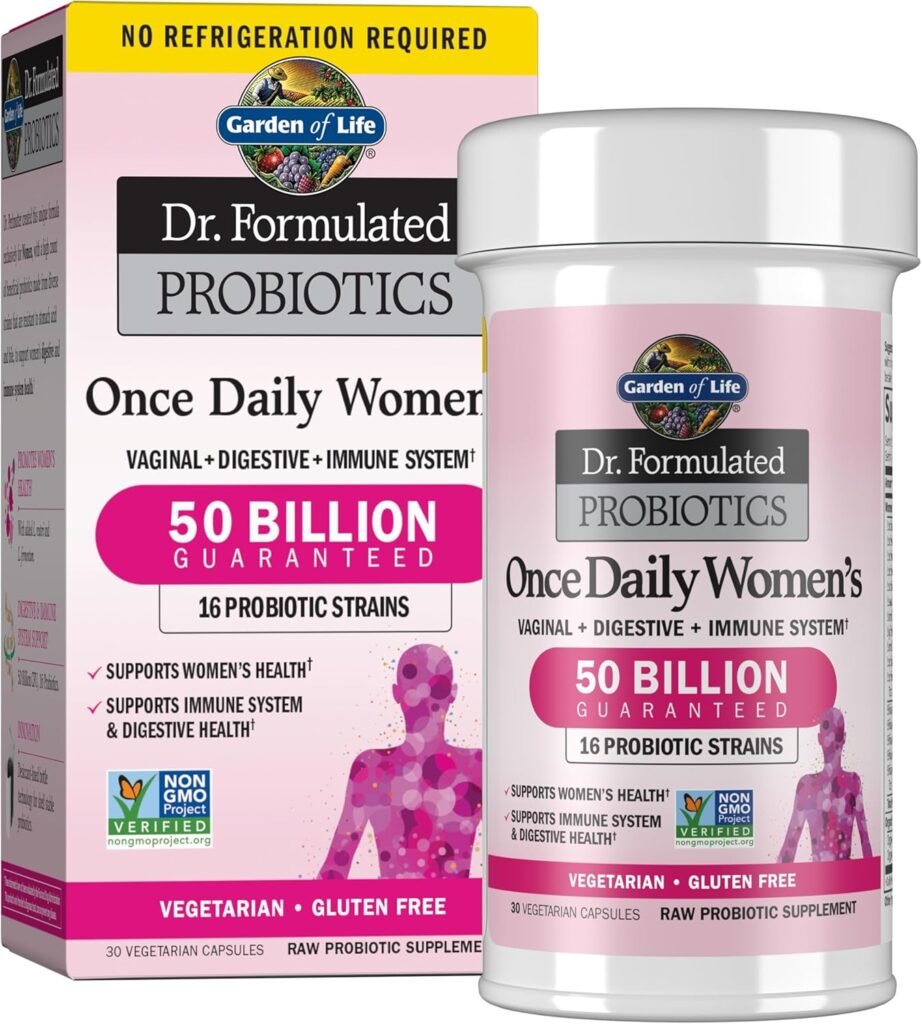
This is the strongest all-around pick for most readers because it combines a broad multi-strain formula with a straightforward one-capsule routine, shelf-stable convenience, and recognizable quality markers. It is not the cheapest option on the list, but it does a better job than most at balancing daily practicality with a label that feels specific enough to women’s needs without becoming overly complicated. The brand page lists 50 billion CFU, 16 probiotic strains, a whole-food prebiotic fiber blend, and no refrigeration requirement, alongside Non-GMO Project verification and NSF gluten-free certification.
Why it stands out:
It is a strong “middle path” product. You get a more robust formula than many basic daily probiotics, but the routine is still simple.
Key ingredients or feature highlights:
- 50 billion CFU per serving
- 16 probiotic strains
- Whole-food prebiotic fiber blend
- No refrigeration required
- Non-GMO Project Verified and NSF Gluten-Free
Format and use notes:
- Capsule
- 1 capsule daily
- Easy fit for travel and desk-drawer storage
Pros:
- Broad-spectrum formula without a two-capsule routine
- Clear quality markers
- Easy for everyday use
- Good balance of gut and women’s-wellness positioning
Cons:
- Not a low-cost pick
- Capsule only
- Some shoppers may prefer a more narrowly vaginal-focused formula
Things to consider:
If you want the best probiotic for women in a broad, practical sense, this is the most balanced answer here. If you are shopping for a very specific vaginal-health angle, a formula like Happy V or Love Wellness may feel more targeted. If you want maximum value, Physician’s Choice gives you more savings per day.
Recommended for:
women who want one daily capsule and a balanced “gut + women’s wellness” formula.
Not ideal for:
strict budget shoppers or people who specifically want the most precision-heavy premium synbiotic.
2. Physician’s Choice Women’s Probiotic
Best for: budget shoppers who still want a women-focused formula with extras.
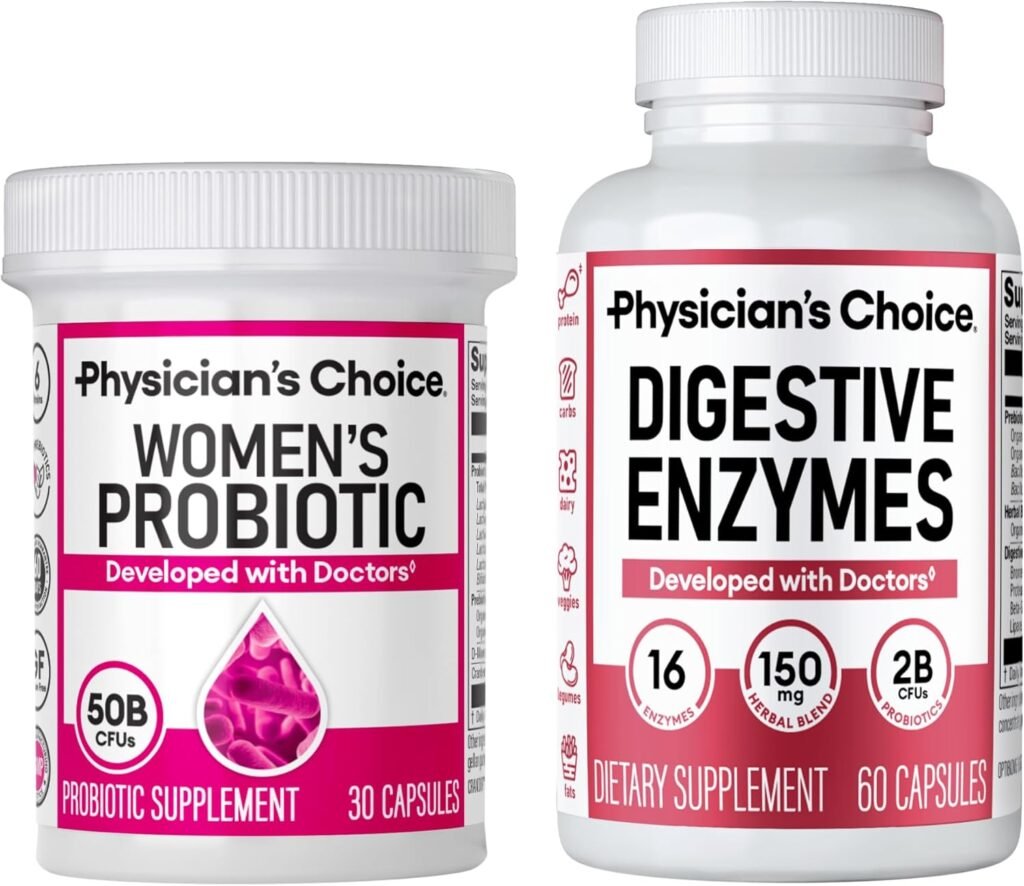
This is the value winner because it packs in a broad marketing profile at a relatively low per-serving cost. The label includes 50 billion CFU, 6 strains, organic prebiotics, cranberry, and D-mannose in an acid-resistant capsule, and the listing shows major current retailer momentum, including strong rating volume and “30K+ bought in past month” visibility. That combination makes it a practical pick for the reader who wants a formula that feels women-specific without stepping into premium pricing.
Why it stands out:
The value math is hard to ignore. It gives more “women’s-support” extras at a lower daily cost than most of the field.
Key ingredients or feature highlights:
- 50 billion CFU
- 6 probiotic strains
- Organic prebiotics
- Cranberry extract
- D-mannose
- Acid-resistant capsule
Format and use notes:
- Capsule
- Typically used as 1 capsule daily
- Strong fit for shoppers who want a filled-out formula without paying premium-brand pricing
Pros:
- Best price-per-serving in this roundup
- Very strong recent retailer demand
- Includes extras many women are already comparing separately
- Convenient daily format
Cons:
- Less minimalist than strain-only shoppers may want
- More overlap risk if you already take cranberry or D-mannose
- Transparency is not as formulation-forward as Seed
Things to consider:
This is a smart best budget answer, but not necessarily the cleanest label for everyone. If you already stack urinary-health supplements, the extras may be redundant. If you want the best prebiotic and probiotic for women and prefer a more deliberate synbiotic architecture, Seed or Renew Life are better fits.
Recommended for:
budget shoppers who want a fuller women-focused formula and recent Amazon bestseller momentum.
Not ideal for:
minimalists, or readers already taking cranberry/D-mannose-based products.
3. Seed DS-01 Daily Synbiotic
Best for: premium shoppers who care most about formulation quality, delivery design, and testing.
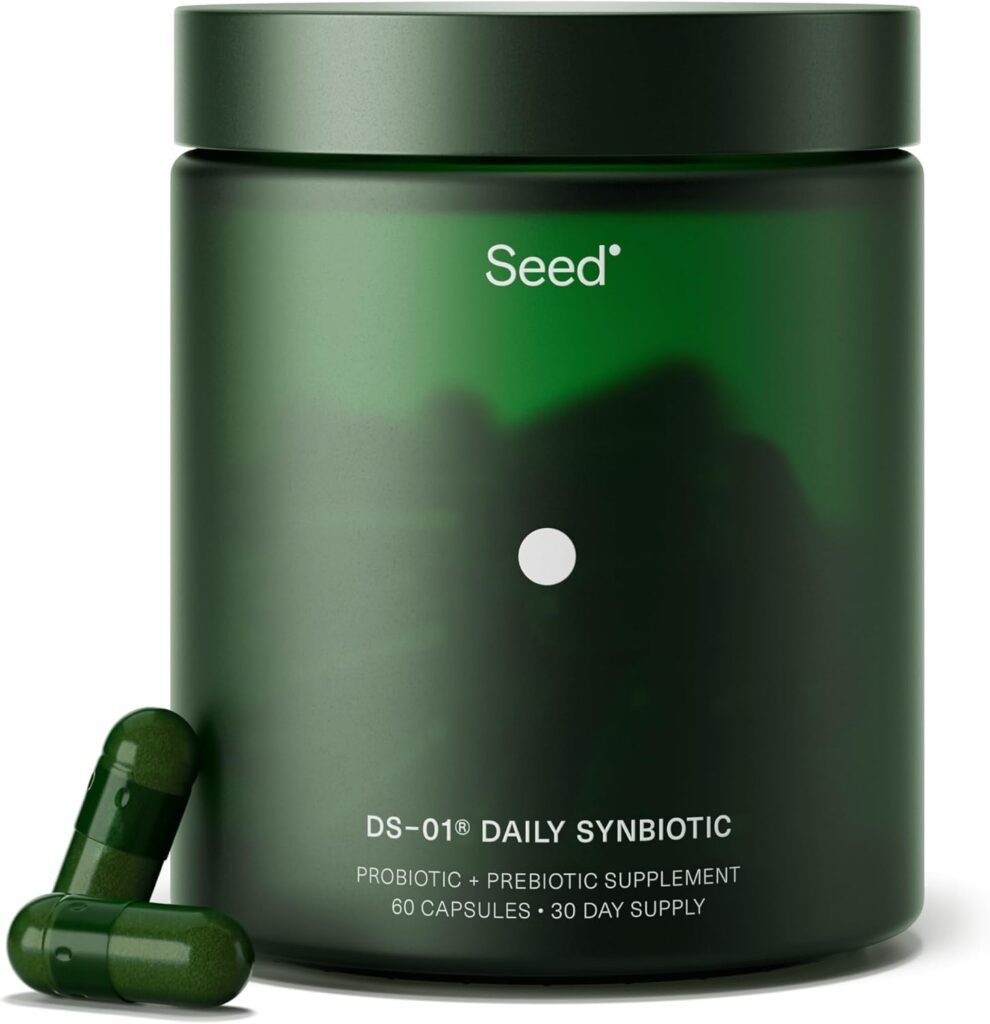
Seed’s formula earns the premium slot because it offers something the rest of the roundup mostly does not: unusually strong product-story transparency. The brand lists 24 strains, 53.6 billion AFU, a 2-in-1 capsule design, third-party testing for allergens and pesticides, and published finished-product clinical work. This is the most “formulation nerd” pick in the lineup, and the best option for readers asking for the best pre and probiotics for women rather than a standard capsule with a generic women’s label.
Why it stands out:
It is the most complete answer for shoppers who care about delivery technology, strain breadth, testing, and premium build quality.
Key ingredients or feature highlights:
- 24 probiotic strains
- 53.6 billion AFU
- Two-capsule daily synbiotic system
- Third-party testing for purity-related concerns
- Vegan and allergen-conscious positioning
Format and use notes:
- Capsule
- 2 capsules daily
- Best for consistent users who do not mind a premium price or two-pill routine
Pros:
- Best transparency and testing profile on the list
- Strong strain breadth
- Thoughtful delivery system
- Excellent for shoppers comparing premium synbiotics
Cons:
- Expensive
- Two capsules per day
- More gut-first than explicitly vaginal-focused
Things to consider:
This is the best premium pick, not the best universal pick. If your budget is flexible and you want the strongest overall formulation story, it is compelling. If your main concern is specifically vaginal-support positioning, Seed may feel broader than necessary.
Recommended for:
premium buyers, label readers, and shoppers who want a research-forward synbiotic.
Not ideal for:
value shoppers or women who want a product aimed more directly at vaginal-support labeling.
4. Culturelle Women’s 4-in-1 Protection
Best for: women who want a mainstream, simple, once-daily probiotic from a well-known OTC brand.
Culturelle is a smart everyday choice because it keeps the routine easy while still naming a meaningful set of strains and framing the formula around women’s digestive, vaginal, immune, and urinary support. The brand page lists 15 billion CFU, five clinically studied strains including LGG, a feminine prebiotic blend, and a one-capsule daily dose. It also has substantial retailer traction and a large rating base, which makes it a strong “daily driver” recommendation for women who do not want something overly niche.

Why it stands out:
It is one of the easiest products here to understand and stick with.
Key ingredients or feature highlights:
- 15 billion CFU
- LGG plus four Lactobacillus strains
- Feminine prebiotic blend
- Once-daily capsule
Format and use notes:
- Capsule
- 1 capsule daily
- Routine-friendly for beginners and busy professionals
Pros:
- Straightforward daily use
- Good brand familiarity
- Simple dose
- Strong retailer trust signals
Cons:
- Less differentiated than premium formulas
- Not the cheapest option in the value tier
- Not as transparent or feature-rich as Seed
Things to consider:
If you want the best probiotic for women for daily wellness, Culturelle is one of the easiest yeses in this guide. It is especially good for someone who wants a recognizable brand and does not want to obsess over complex label jargon.
Recommended for:
busy professionals, beginners, and women who want a simple mainstream daily capsule.
Not ideal for:
shoppers chasing maximum strain count or premium delivery technology.
5. Happy V Prebiotic + Probiotic
Best for: women whose shopping focus is clearly vaginal-support labeling.
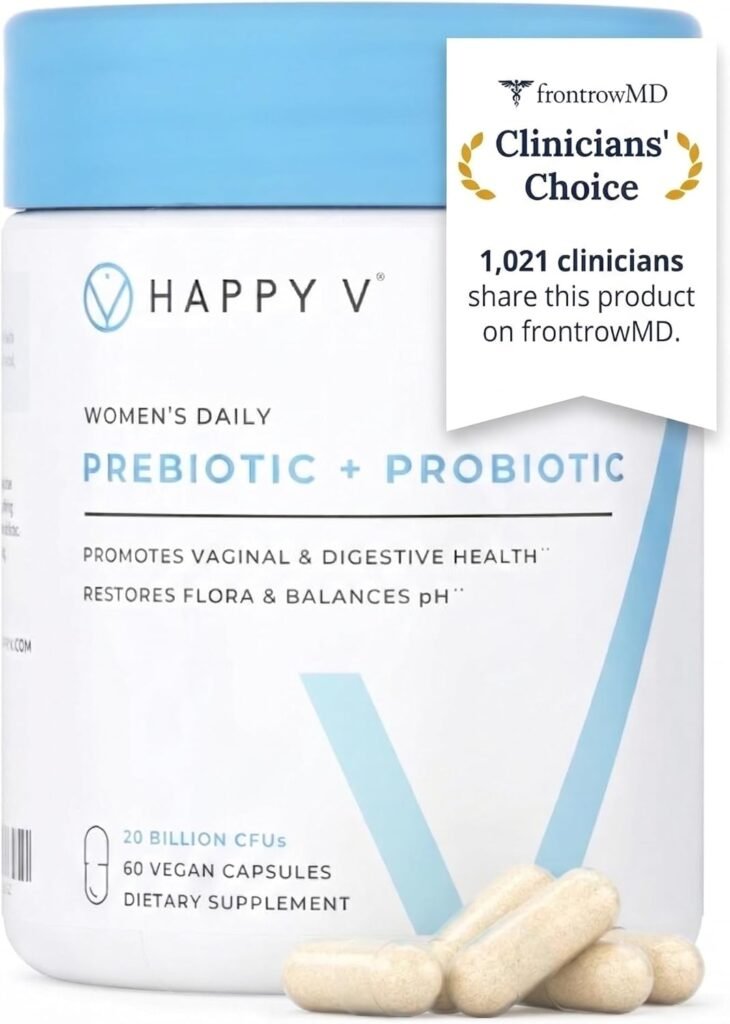
Happy V makes the list because it gives shoppers something rare in this niche: a more granular strain presentation. The official page breaks out the formula into seven named strains with explicit amounts, plus PreforPro as a prebiotic, delayed-release capsules, and broad allergen-friendly positioning. It also shows strong recent retailer demand, including “20K+ bought in past month” visibility. That combination makes it one of the strongest choices for readers searching phrases like best vaginal probiotic for women or best women’s probiotic for vaginal health.
Why it stands out:
The strain-by-strain transparency is stronger than most vaginal-focused competitors.
Key ingredients or feature highlights:
- 7 named probiotic strains
- PreforPro prebiotic
- Delayed-release capsule
- Vegan and major-allergen-conscious positioning
- cGMP manufacturing note on brand page
Format and use notes:
- Capsule
- 2 capsules daily
- Better fit for people comfortable with a more targeted routine
Pros:
- Very good strain-label clarity
- Strong vaginal-support positioning
- Strong recent demand
- Good travel friendliness
Cons:
- Two capsules daily
- More expensive than mainstream options
- “Vaginal support” marketing is broader than the current evidence can fully guarantee
Things to consider:
This is a strong product for shopping intent, but it is important to keep expectations realistic. Guidance from ACOG and CDC does not support probiotics as treatment or prevention for vaginitis/BV. So this is best viewed as a daily-support supplement choice, not as a replacement for diagnosis or care if symptoms are persistent or recurrent.
Recommended for:
women who want a more clearly vaginal-focused oral formula and do not mind two capsules daily.
Not ideal for:
shoppers who want the cheapest option, or women hoping a supplement will replace care for concerning vaginal symptoms.
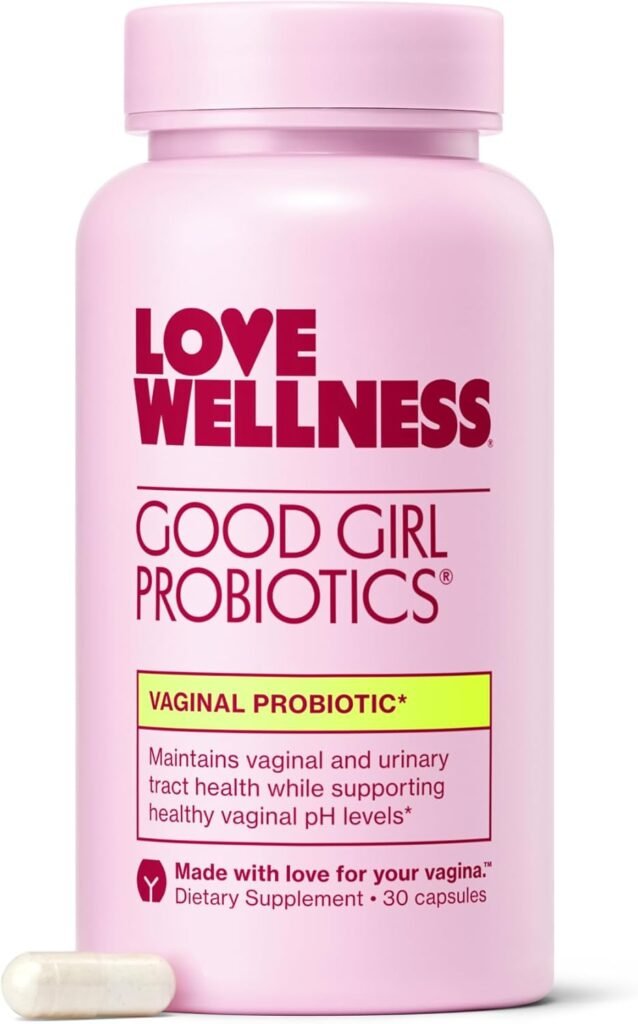
6. Love Wellness Good Girl Probiotics
Best for: beginners and women who dislike complicated routines.
Good Girl is a very strong beginner pick because it keeps the user experience simple: one daily capsule, shelf-stable format, vegan and gluten-free positioning, traceable ingredients, and third-party testing language. The formula lists nine strains, and the price is accessible for a branded women’s probiotic. It does not try to outgun everyone on CFU size, which is actually not a weakness by itself: the ODS notes that higher CFUs alone do not determine benefit.
Why it stands out:
It is the easiest recommendation for women who want a low-friction starting point.
Key ingredients or feature highlights:
- 9 strains
- Once-daily capsule
- Shelf-stable
- Vegan and gluten-free
- Third-party tested and traceable-ingredient messaging
Format and use notes:
- Capsule
- 1 capsule daily
- Comfortable fit for people who do not want a two-pill regimen
Pros:
- Beginner-friendly
- Strong convenience
- Good price
- Clean, easy-to-understand format
Cons:
- Smaller CFU headline than some competitors
- Less broad gut-first positioning than premium synbiotics
- Not the strongest choice for shoppers who want maximum formulation complexity
Things to consider:
If you have been asking “what is the best probiotic for women if I’m just getting started?”, this is one of the best answers. It is also a good fit for women who do not like swallowing multiple capsules or navigating combo formulas with lots of extras.
Recommended for:
beginners, one-capsule users, and women who want vaginal-support positioning without a complicated routine.
Not ideal for:
women who want a premium synbiotic or a very high-strain-count gut-first formula.
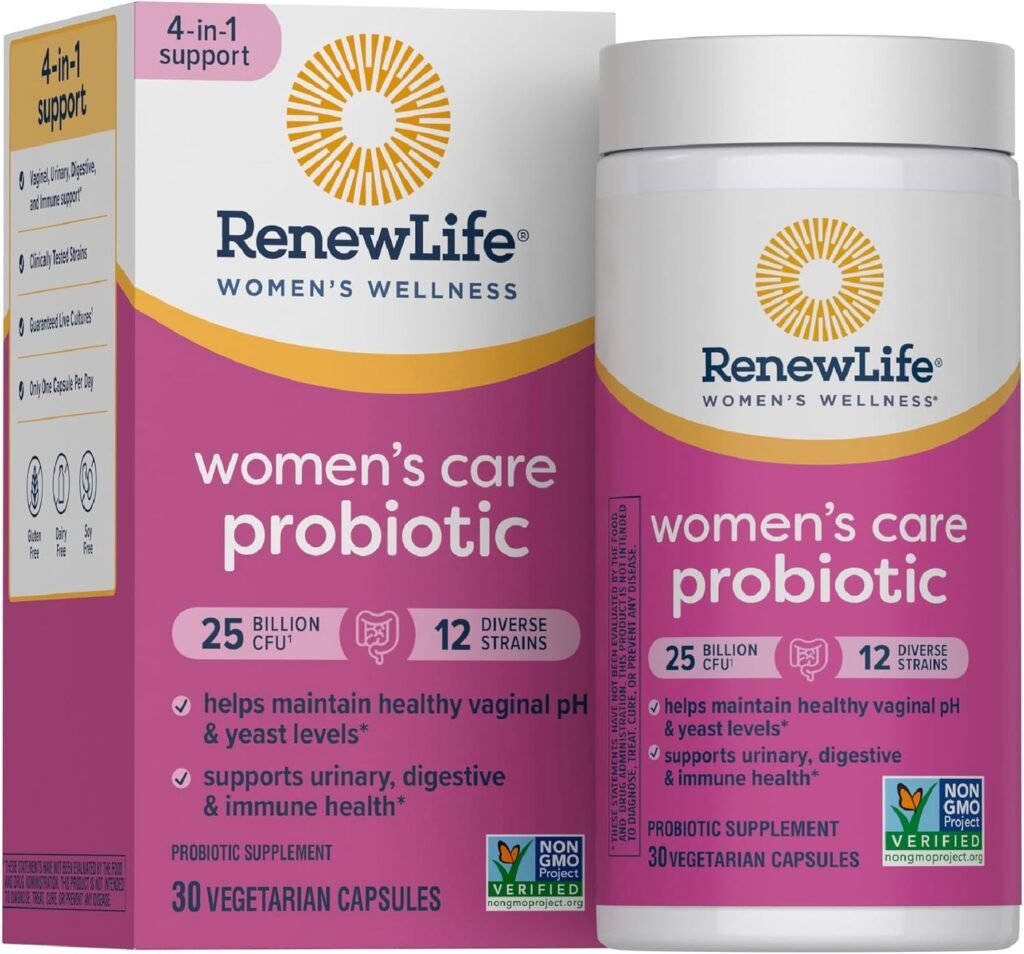
7. Renew Life Women’s Care 25 Billion
Best for: women who want a feature-rich capsule without moving into premium pricing.
Renew Life is a strong clean-label value pick because it combines a delayed-release capsule with 25 billion CFU, 27 strains, and prebiotic + probiotic + postbiotic positioning, all at a reasonable daily cost. The official page also flags vegan, gluten-free, dairy-free, and soy-free attributes. For women asking about the best probiotic and prebiotic for women without wanting Seed-level pricing, this is one of the most attractive compromises in the roundup.
Why it stands out:
It is one of the best “feature versus cost” formulas here.
Key ingredients or feature highlights:
- 25 billion CFU
- 27 strains
- Prebiotic + probiotic + postbiotic
- Delayed-release vegan capsule
- Free from several common allergens
Format and use notes:
- Capsule
- 1 capsule daily
- Strong fit for shoppers who want a modern synbiotic-style formula without a premium bill
Pros:
- Strong label value
- Good price per serving
- Delayed-release design
- One-capsule routine
Cons:
- Less clearly vaginal-focused than Happy V or Love Wellness
- Not as transparently premium as Seed
- Brand positioning is broader than a highly targeted women’s-support label
Things to consider:
This is one of the best picks for women who want more than a basic probiotic but still care about price. It also works well for women who prefer a delayed-release capsule and want to keep their routine simple.
Recommended for:
women who want a one-capsule synbiotic-style option with strong value.
Not ideal for:
women whose shopping focus is mainly vaginal-support labeling.
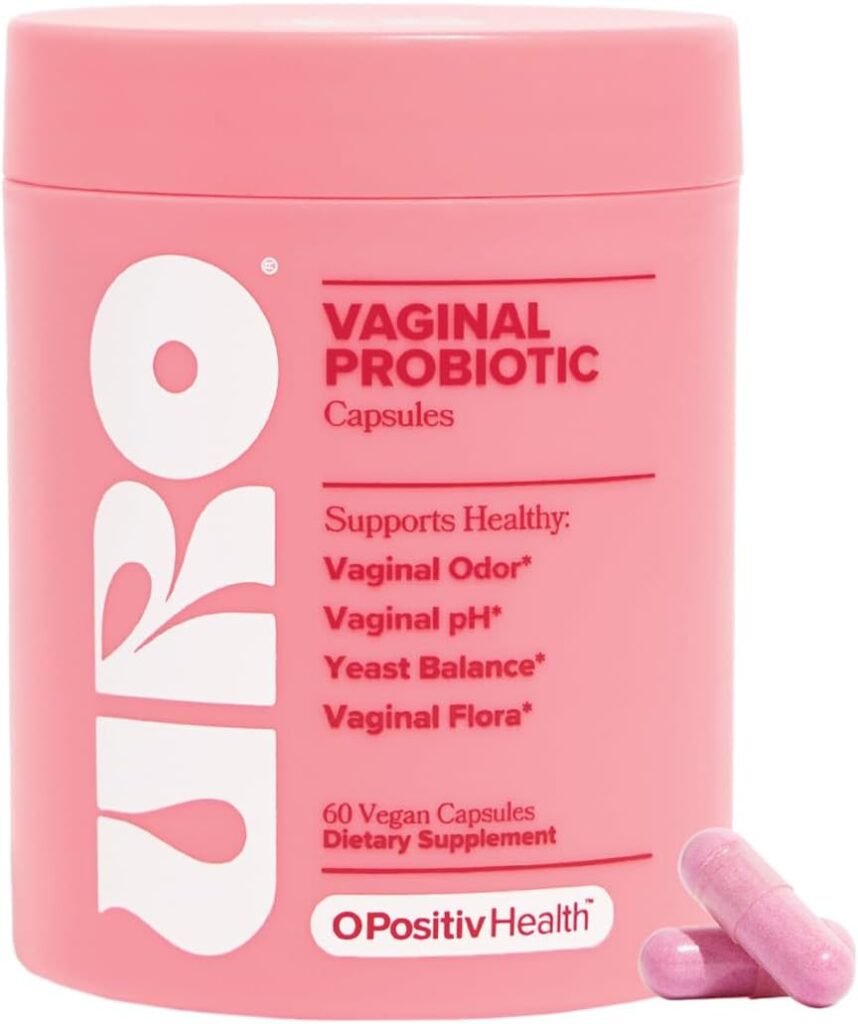
8. O Positiv URO Vaginal Probiotic
Best for: shoppers who want a narrower lactobacillus-focused vaginal-support formula.
O Positiv URO is a reasonable pick for women who do not want the broadest gut-targeted formula, but instead want a more focused vaginal-support label. The official page lists four Lactobacillus strains, 5 billion CFU, 400 mg of XOS prebiotics, and a two-capsule serving. The listing and retail snippets also emphasize vegan, non-GMO, and third-party tested positioning. Compared with broader options in this roundup, URO feels narrower and simpler. That is either a plus or a minus depending on your goal.
Why it stands out:
It is one of the cleanest examples of a narrower, vaginal-support-focused label.
Key ingredients or feature highlights:
- 4 Lactobacillus strains
- 5 billion CFU
- XOS prebiotic
- Vegan, non-GMO, third-party tested positioning
Format and use notes:
- Capsule
- 2 capsules daily
- Better for shoppers who want focus, not breadth
Pros:
- Simple and easy to understand
- Targeted rather than crowded
- Good fit for women who dislike overly stuffed formulas
Cons:
- Lower CFU headline than many competitors
- Two capsules daily
- Less broad digestive-support appeal than the all-rounder products
Things to consider:
This is not the formula I would choose if you want one product to do the broadest possible gut-support work. It makes more sense if you specifically want a vaginal-support-oriented label and prefer simplicity over formula size.
Recommended for:
women who want a simpler lactobacillus-focused women’s probiotic.
Not ideal for:
women wanting the broadest gut-plus-vaginal all-rounder or the best premium transparency package.
What to Look For Before Buying
How to choose the right one
Start with your real reason for shopping, not the biggest marketing promise. If you want a simple everyday gut-support capsule, a mainstream daily product like Culturelle may be enough. If you want a more premium synbiotic, Seed or Renew Life make more sense. If you are mainly drawn to vaginal-support positioning, choose products that make their Lactobacillus emphasis and routine clear, but keep in mind that “support” is not the same thing as “treat.”
Ingredient and label basics
The most important label lesson is this: strain specificity matters more than headline CFU bragging. The ODS notes that benefits depend on the specific microorganisms and strains in a product, and that higher CFU counts alone do not necessarily mean better health effects. If a label gives you real strain detail and clear serving instructions, that is usually more useful than a giant number with weak context.
Format comparison
Capsules still dominate the stronger women’s probiotic field because they are easier to formulate around specific strains and more predictable daily doses. If swallowing pills is a problem, a gummy may be easier to stick with, but you should compare sugar content, strain clarity, and whether the product really suits your goal. The best capsule is not the one with the fanciest story. It is the one you will actually take consistently.
How to compare price per serving
Do not compare bottle price alone. Compare daily cost, especially if one product requires two capsules. A “cheap” bottle can become expensive if it lasts only 15 or 30 days, while a mid-priced bottle with a single daily dose may be the better buy. In this roundup, value varies widely from around $0.62 per day to around $1.67 per day.
Sugar, fillers, and unnecessary extras
A women’s probiotic does not need to include every wellness trend. Sometimes extras like cranberry, D-mannose, prebiotic fibers, or postbiotics are useful. Sometimes they just make the label busier or overlap with what you already take. If you already use a urinary-support supplement, a probiotic that also adds cranberry and D-mannose may not be the smartest stack.
Quality and testing markers
Because the FDA does not approve dietary supplements before they are marketed, quality markers matter. Clear strain identification, good manufacturing disclosures, third-party testing language, or recognized verification programs are worth paying attention to. USP notes that verified products give consumers more confidence that what is on the label is in the bottle.
Daily routine fit
Routine fit is underrated. A one-capsule shelf-stable formula often beats a more impressive-looking bottle that you forget to take. If convenience matters most, Garden of Life, Culturelle, Love Wellness, and Renew Life are easier habits than the two-capsule options.
Common mistakes buyers make
The biggest mistakes are chasing very high CFU claims, assuming “for women” always means vaginal-support evidence, believing weight-loss claims too quickly, and self-diagnosing vaginal symptoms based on supplement marketing rather than getting evaluated when symptoms persist.
If digestive regularity is one of your bigger goals, add an internal link here to Best Fiber Supplement for Women. If you are also comparing evening-routine supplements, add an internal link to Best Magnesium Supplement for Women. These are already live on the site homepage and fit the same supplement buyer journey.
Safety and Suitability Notes
When to talk to a healthcare professional first
Talk to a clinician before using a probiotic if you are immunocompromised, critically ill, undergoing chemotherapy, have a central line, or have a history that makes live-microbe supplements higher risk. For most healthy adults, side effects are usually mild and digestive, but these products are not equally low-risk for everyone.
Pregnancy and breastfeeding caution
The evidence base generally suggests probiotic and prebiotic products are usually well tolerated during pregnancy and lactation, but formulas differ, targeted vaginal claims are not all equally supported, and supplements are not preapproved by the FDA. That is why “probably safe” should still mean “worth checking with your OB-GYN, midwife, or clinician first,” especially if you are using a women’s formula marketed around intimate symptoms.
Medication and condition awareness
Serious direct drug interactions are not the main issue with probiotics. The bigger issue is whether your health condition makes live-microbe supplementation a bad fit, or whether symptoms that sound “vaginal” may actually need diagnosis and treatment. If you are on immunosuppressive therapy, have active severe illness, or are using multiple supplements with overlapping ingredients, clinician input is smart.
Why more is not always better
More strains are not always better. More CFUs are not always better. Bigger formulas are not automatically better. The right question is whether a product’s strains, delivery system, and routine create a good fit for your goal. That is why Love Wellness can still be a sensible pick for a beginner even though the label headline looks smaller than some competitors.
Why symptom-based self-diagnosis can be misleading
This point deserves to be visible because most commerce pages bury it. ACOG says self-diagnosis of common vaginitis is not recommended because vulvovaginal symptoms are nonspecific, and probiotics are not recommended for treatment or prevention of vaginitis. If you have recurring odor, burning, itching, pelvic pain, bleeding, fever, or unusual discharge, do not let a supplement page make the decision for you.
Best for Different Types of Users
Women in their 20s and 30s: Culturelle or Love Wellness are strong starting points if you want something easy to live with and not overwhelmingly complex. These years often reward consistency more than supplement maximalism.
Women over 40: Garden of Life or Renew Life are particularly good fits because they combine one-capsule simplicity with broad support, which is often more useful than niche formulas when overall routine sustainability matters.
Women over 50: There is no single universally best probiotic for women over 50, but menopause-related shifts can involve microbiome changes and reduced lactobacillus dominance. That makes it reasonable to prioritize simple daily use, label clarity, and a formula you can discuss with your clinician if symptoms are more than occasional. Renew Life is the best value-led starting point here, while Seed is the stronger premium option.
Active women: Garden of Life and Seed both work well for women who want a shelf-stable product they can keep in a routine bag and take consistently.
Busy professionals: Culturelle, Love Wellness, and Renew Life are easiest if you want one capsule and minimal friction.
Travelers: Shelf-stable capsules win over more finicky formats. Garden of Life, Seed, Love Wellness, and O Positiv all fit travel better than refrigerated or fragile options.
Vegans or vegetarians: Seed, Love Wellness, Renew Life, Happy V, O Positiv, and Garden of Life all publish vegan or vegetarian-friendly positioning on their current pages.
Budget shoppers: Physician’s Choice is the strongest value choice, followed by Renew Life and Love Wellness if you want less formula clutter.
Premium buyers: Seed is the premium pick. Garden of Life is the best “premium-ish without going all the way premium” choice.
Beginners: Love Wellness first, Culturelle second. If the product feels too complicated, you are less likely to keep using it.
Women who dislike swallowing pills or complicated products: pick a one-capsule product before you chase a more impressive label. That usually means Love Wellness, Culturelle, Renew Life, or Garden of Life.
Who Should Avoid This Product Category
This category is not a great self-start option if you are severely immunocompromised, medically fragile, or dealing with persistent vaginal symptoms that really need diagnosis. It is also a poor place to shop if your main goal is weight loss. Evidence on probiotics and weight loss is mixed, and authoritative clinical explainers emphasize that probiotics are not a reliable stand-alone weight-loss tool. If that is your main reason for buying, you are likely shopping the wrong category.
FAQ
What is the best probiotic for women overall?
For most readers, Garden of Life Dr. Formulated Once Daily Women’s is the best overall pick because it balances broad support, one-capsule convenience, shelf stability, and better quality markers than many mid-priced rivals.
What are the best probiotics for women if I want vaginal-focused support?
Happy V, Love Wellness Good Girl, and O Positiv URO are the most vaginal-focused oral formulas in this roundup. That said, oral probiotics should not be treated as a replacement for medical treatment of vaginitis or BV when symptoms are persistent or recurrent.
What is the best prebiotic and probiotic for women?
If you want a synbiotic-style formula, Seed DS-01 is the strongest premium answer and Renew Life is the stronger value answer. Garden of Life and Culturelle also include prebiotic support, but they are not built with the same premium synbiotic positioning as Seed.
What is the best probiotic for women over 50?
There is no one-size-fits-all answer, but for women over 50 a smart first step is to prioritize simplicity, tolerability, and label clarity rather than hype. Renew Life is the best value-led choice in this guide, while Seed is better if you want a premium synbiotic and do not mind paying more.
Are probiotic gummies as good as capsules?
Not automatically. Gummies can be easier to remember, which matters, but capsules usually offer clearer strain targeting and more serious formulation options. If pills are a barrier, a gummy may still be worth considering — just compare sugar, strain clarity, and your actual reason for taking it.
Can probiotics help with weight loss?
They are not a strong or reliable weight-loss solution. Some studies and reviews suggest possible small supportive effects in some populations, but major clinical explainers still describe the evidence as mixed or unclear. I would not choose a probiotic primarily for weight loss.
How long does it take to notice a difference from a probiotic?
It varies. Some people notice digestive changes within a couple of weeks, while others need longer or notice very little. The more realistic way to judge a probiotic is whether it fits your routine, tolerance, and label goals over time, not whether it creates dramatic changes fast.
Should I take a probiotic if I have odor, itching, or discharge?
Not as a first response if symptoms are persistent, severe, or recurrent. Vaginal symptoms are nonspecific, and ACOG specifically advises against self-diagnosis of common vaginitis. It is better to get evaluated than to assume a probiotic is the answer.
Final Verdict
If you want the best probiotic for women in the broadest, most useful sense, go with Garden of Life Dr. Formulated Once Daily Women’s. It is the best all-round balance of routine fit, quality markers, and label strength. If you want the best value, choose Physician’s Choice Women’s Probiotic. If you want the best premium formula, choose Seed DS-01 Daily Synbiotic. If your main priority is a vaginal-focused oral formula, Happy V is the strongest targeted choice in this roundup, while Love Wellness Good Girl is the easiest beginner-friendly entry point.
The final recommendation by buyer type is simple. Choose Garden of Life if you want the safest broad recommendation. Choose Physician’s Choice if price matters most. Choose Seed if formula architecture and testing matter most. Choose Happy V if you are intentionally shopping a vaginal-support-oriented label. Choose Love Wellness if you want one-capsule simplicity. And skip the whole category if you are really trying to solve a medical problem that needs diagnosis, or if you are shopping primarily for weight loss claims.