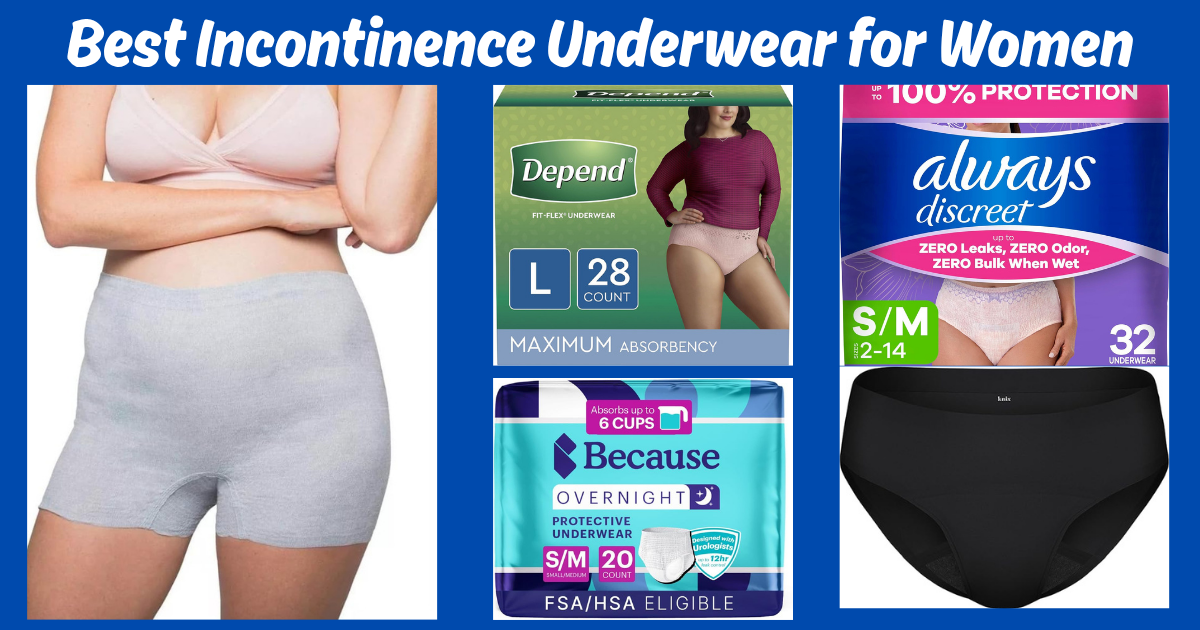
Need discreet protection? This expert guide reviews the best incontinence underwear for women in 2026, comparing top brands by comfort, fit, and absorbency for day or night. Learn how to choose the right leakproof underwear for your needs.
Disclaimer: This article is for informational and shopping guidance only and is not medical advice. Everyone’s health needs are unique. If you have persistent or unusual symptoms, or questions about your incontinence, please consult a qualified healthcare professional.
Table of Contents
Introduction
Finding the best incontinence underwear for women can feel overwhelming when you’re comparing absorbency, comfort, fit, and price. Bladder or bowel leaks can happen to women of any age, especially after childbirth or during menopause. In fact, urinary incontinence affects over 44% of women between ages 20 and 80. Choosing the right incontinence underwear can make a big difference in comfort, confidence, and skin health. Good leakproof underwear lets you stay active and worry-free, whether at work, on a road trip, or overnight. This guide will show you our top picks for women’s incontinence underwear (both disposable and reusable), explain key features (absorbency, fit, materials), and give you tips on how to choose the best style for your situation. We cover everything from light daily protection to heavy overnight protection, including budget options and premium brands. Read on to find out which underwear will keep you dry and comfortable.
If you’re planning beach trips or spa days, pairing discreet incontinence solutions with the right swimwear can help you feel more comfortable and prepared. You can explore options in our guide to [Best Swimsuits for Women].
Quick Picks: Top Recommendations
- Best Overall: Because Market Premium Maximum Plus Underwear – Reliable 4-cup absorbency and snug fit for everyday use.
- Best Budget: Depend Fit-Flex Maximum Protection – Affordable disposable pull-on widely available for light-to-moderate leaks.
- Best Premium (Heavy/Overnight): Because Market Premium Overnight Plus – Super-absorbent (up to 6 cups) pull-ups for nights and long trips.
- Best for Daily Wear (Light Leaks): Knix Leakproof Bikini Underwear – Thin, reusable panties that look like regular underwear and handle mild dribbles.
- Best for Bowel Incontinence: Tranquility SmartCore Disposable Briefs – High-capacity tabbed briefs designed for combined bladder and bowel leaks.
- Best for Seniors: Always Discreet Maximum Protection – High-absorbency disposable briefs with contoured design and odor control for easy, everyday use.
Comparison Table
| Product | Best For | Key Features/Format | Price / Use | Editorial Take | CTA Placeholder |
|---|---|---|---|---|---|
| Because Premium Maximum Plus Underwear | Daily moderate leaks | Disposable pull-up; holds ~4 cups; odor-control tech | ≈$1.50–$2 per use | Versatile daily wear underwear that balances capacity with comfort. | [Check price] |
| Depend Fit-Flex Maximum Protection | Budget option for light/moderate leaks | Disposable pull-up; moderate absorbency; soft sides | ≈$0.50–$1 per use | A cost-effective choice for beginners or light leaks – easy to find at stores. | [Check price] |
| Because Premium Overnight Plus Underwear | Heavy leaks / Overnight use | Disposable pull-up; holds ~6 cups; reinforced leak guards | ≈$2–$3 per use | Top choice for maximum overnight protection – nearly leak-proof for long wear. | [Check price] |
| Knix Leakproof Bikini Underwear | Active/daily light leaks | Washable underwear; holds ~2–3 cups; thin fabric | ≈$1–$2 per day (reusable) | Fashionable reusable panties ideal for light incontinence and exercise. | [Check price] |
| Always Discreet Maximum Protection | Seniors / Postpartum basics | Disposable brief; maximum absorbency; cotton-like feel | ≈$1.50–$2 per use | Reliable, underwear-like disposable pants for women with moderate to heavy leaks. | [Check price] |
| Tranquility SmartCore Disposable Briefs | Bowel or heavy all-day leaks | Tab-style diaper; ultra-high absorbency; cloth-like exterior | ≈$3–$4 per use | Medical-grade brief for severe incontinence – use only if lighter options fail. | [Check price] |
| Frida Women’s Postpartum Underwear | New moms / Postpartum bleeding | High-waisted, washable; pocket for extra pads | ≈$1–$1.50 per use | Postpartum specialist panties that double as incontinence underwear for new moms. | [Check price] |
How to Choose the Best Incontinence Underwear for Women
Our recommendations are based on extensive product research and expert criteria. We did not rely on personal anecdotes or exaggerated claims. Instead, we examined dozens of women’s incontinence products, read hundreds of verified customer reviews, and evaluated brand specifications. We considered key factors recommended by experts:
- Absorbency: The number of “cups” of fluid the garment can hold (a practical measure used by Because Market).
- Skin Safety: Breathable fabrics, moisture-wicking layers, and hypoallergenic materials. We prioritized items PFAS-free and chlorine-free to reduce rash risk.
- Fit & Leak Protection: We looked at how well the waistband, leg cuffs, and gender-specific cuts prevent side leaks. Proper fit is critical – too loose or tight and leaks happen.
- Value & Convenience: We compared cost per use (including reusable vs disposable), ease of use (tabs vs pull-on), and customer feedback on durability. For example, a higher-priced pull-up with more absorbency can actually be cheaper per leak-managing capacity.
Where available, we leaned on health authority advice: Women’s Health editors consulted gynecologists and emphasized materials like cotton or bamboo; Healthline points out that women should talk to a doctor if leaks begin suddenly. Throughout, our goal was to give honest, practical guidance, not marketing fluff. Every product listed includes real pros and cons so you can weigh trade-offs (capacity vs bulk, cost vs reusability, etc.) and find what fits your lifestyle.
6 Best Incontinence Underwear for Women
To help you find the best incontinence underwear for women, we compared reusable and disposable options for daily wear, overnight use, and heavier leaks.
1. Because Market Premium Maximum Plus Underwear
Best for: Daily moderate leakage and active women seeking high capacity.
Because Market’s Premium Maximum Plus is a disposable pull-up style with about 4 cups of absorbency. It features a “DryFeel” core that wicks moisture away from skin and built-in odor-blocking technology. It comes in gender-specific designs (different cuts for women and men) and even a dark color for discretion. Reviewers praise its snug fit and how it stays hidden under clothes. According to manufacturers, it also has stretchy, leak-resistant side panels and a quick-dry interior.
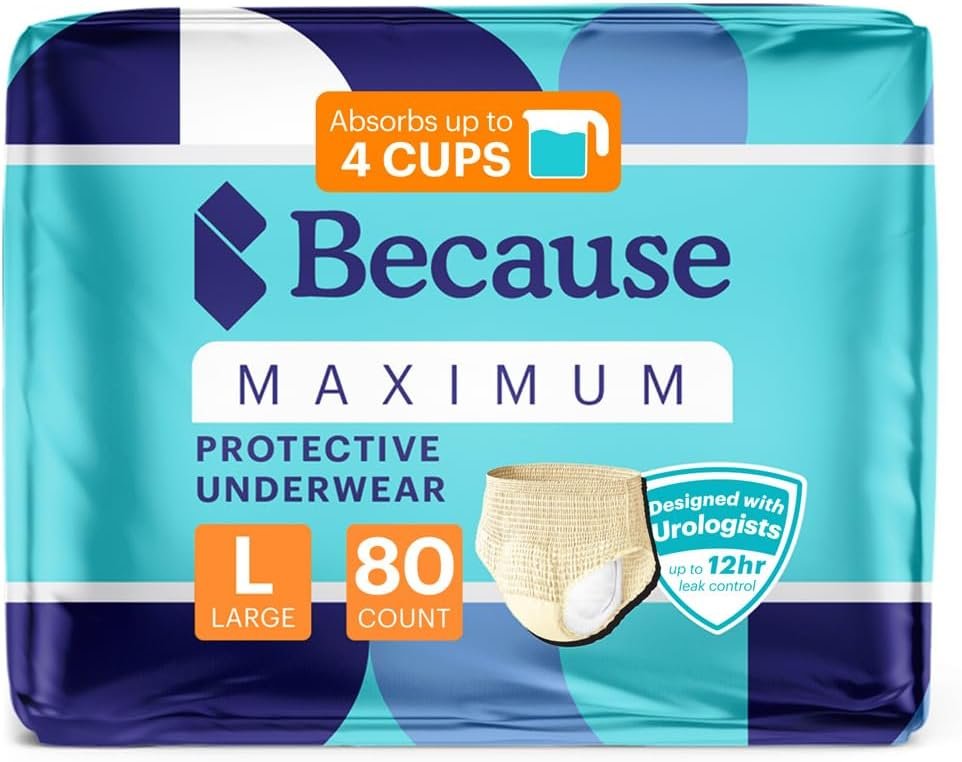
Why it stands out: It balances absorbency with comfort – more protective than budget options but slimmer than overnight briefs. It offers good capacity for most daily needs without the bulk of a diaper. Plus, it’s often available in convenient packs or subscriptions, and shipping is discreet.
Key features:
- Pull-up style with elastic waistband (no tabs)
- Absorbent core holds ~4 cups of urine (approx. 32 ounces)
- Anti-odor lining (often carbon or polymer)
- Moisture-wicking inner layer to keep skin dry
- Contoured for women’s anatomy (lower cut in front, higher in back)
Format & use:
- Disposable brief (worn like underwear) – change every 4–6 hours or when saturated.
- Machine-washable? No (disposable only).
- Straightforward sizing: available in S–XL (choose waist size per brand chart).
- Convenient for day-long wear (office, errands) but not meant for several nights without change.
Pros:
- High absorbency (handles moderate leaks without feeling damp)
- Comfortable, underwear-like fit (many say it feels like normal panties)
- Dual odor control and quick-dry core
- Available in women’s styles (white, and some dark color option)
Cons:
- Disposable (ongoing cost and waste)
- White color may show through very light clothing
- Requires proper disposal; not eco-friendly
- More expensive per piece than budget brands
Things to consider: While very effective for moderate leaks, it may be overkill (and too warm) if you only have very light dribbles. It’s also not reusable, so factor in the ongoing cost (though Because Market often offers savings with bundles or subscription). Women who prefer a slimmer profile in workout leggings might find it slightly visible. If you’re unsure about sizing, note that Because Market’s size runs true; don’t size up unless you want extra room.
Recommended for: Active women and busy professionals needing reliable daily protection without bulk. Good for perimenopause leaks or post-pregnancy routine.
Not ideal for: Women with only very light leakage (even 4 cups might be more than needed), or those committed to all-natural/organic products (this is a synthetic disposable). Also skip this if you’d rather use cloth underwear with pads – it’s designed as an all-in-one solution, not insert compatible.
2. Depend Fit-Flex Maximum Protection Adult Underwear
Best for: Budget-conscious women needing light-to-moderate protection and easy availability.
Depend’s Fit-Flex is a popular disposable pull-on style found in most pharmacies and big-box stores. It provides around 3–4 cups of absorbency, with a soft stretch waistband labeled Maximum Protection. The sides and leg cuffs are made of breathable nonwoven fabric (more cloth-like than older plastic models). Users report a secure fit for walking or standing, and Depend’s pull-on design is easy to change.
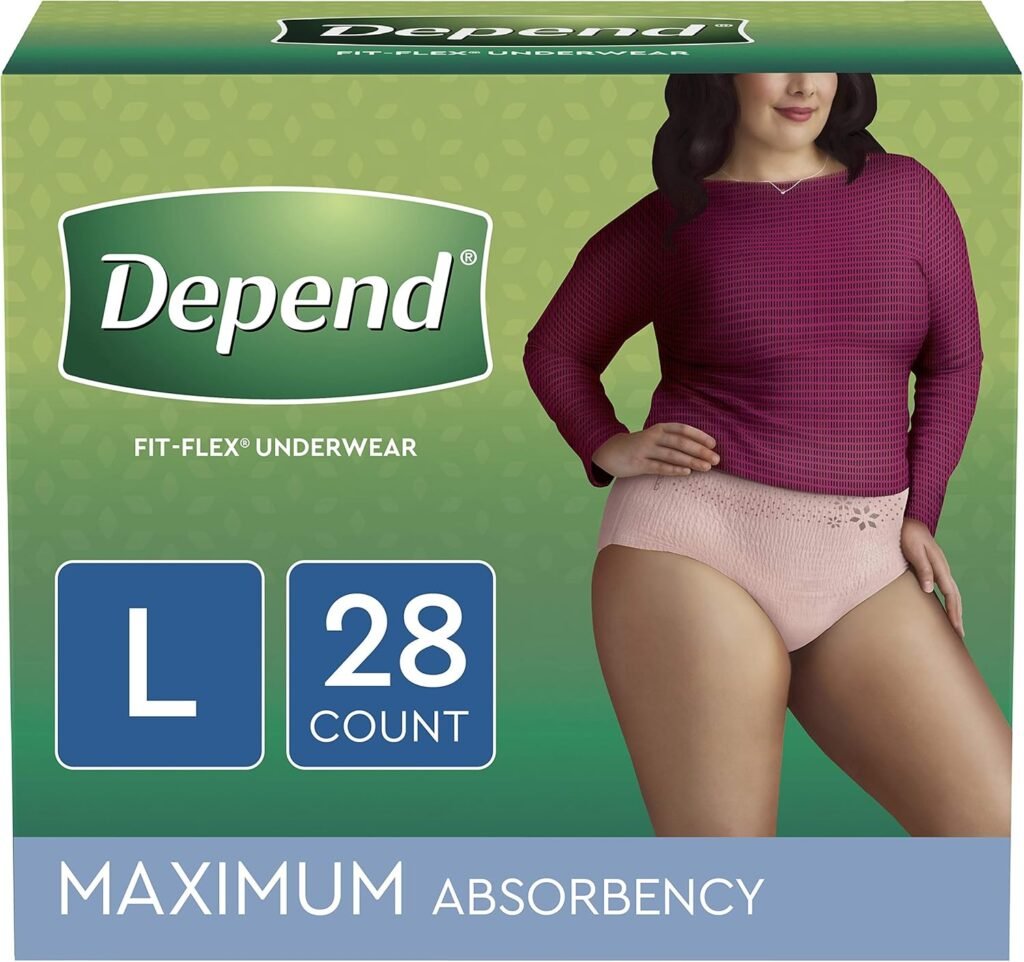
Why it stands out: Depend focuses on affordability and comfort. At a lower cost than many specialty brands, it offers decent leakage protection for daily errands or work. Its Fit-Flex stretch panels adapt well to different body shapes, reducing sagging. It’s a go-to starter product for many women new to incontinence gear.
Key features:
- Pull-on underwear style (no tabs or seams on sides)
- Moderate absorbency core (good for 3–4 cups)
- OdorLock™ technology (claims to neutralize smells)
- Elastic FlexFit waistband stretches up to 50% to ease dressing
Format & use:
- Disposable pant style – toss after one use.
- Best for daytime or travel; can last through errands or a work shift if changed regularly.
- Available in plus sizes and often with neutral patterns or prints (for Variety in “Boutique” line).
- Available at nearly every retailer that sells incontinence or even on Amazon.
Pros:
- Lowest cost per unit of many options (budget-friendly)
- Easily found in stores (CVS, Walmart, etc.)
- Decent protection for moderate leaks
- Soft, breathable sides reduce sweating
Cons:
- Limited absorbency (not for very heavy leaks or overnight)
- Slightly thicker feel; some users hear the crinkle when walking
- Not very high fashion – mostly plain white or simple patterns
- More limited “women’s-specific” cuts (mainly unisex shape)
Things to consider: Depend Fit-Flex is best as an intro product or backup. If you have very heavy incontinence, you’ll likely need to change multiple times a day. The disposable nature means checking stock regularly (though subscription services can help). Also note that Depend’s sizing tends to run small; many reviewers advise sizing up to avoid constriction.
Recommended for: Beginners, younger women or seniors who need a reliable, no-frills protective pant on a budget. Great for travel or outpatient hospital visits.
Not ideal for: Women with heavy overflow leaks or those wanting a product that truly mimics regular underwear in feel and style. Also not the best if “eco-friendly” is a priority, since it’s a single-use plastic-based garment.
3. Because Market Premium Overnight Plus Underwear
Best for: Heavy leakage and overnight protection (long-lasting absorbency).
Because Market’s Overnight Plus is a super-absorbent disposable pull-up (6+ cups). It features a dual-layer core and extra leak barriers, especially around the thighs, to handle hours of use. The underwear is thicker and more diaper-like than daytime versions, but the stretchy waistband and leg cuffs are still relatively soft. Many users turn to this style when they need all-night coverage or when travel (long flights, road trips) means changing infrequently.
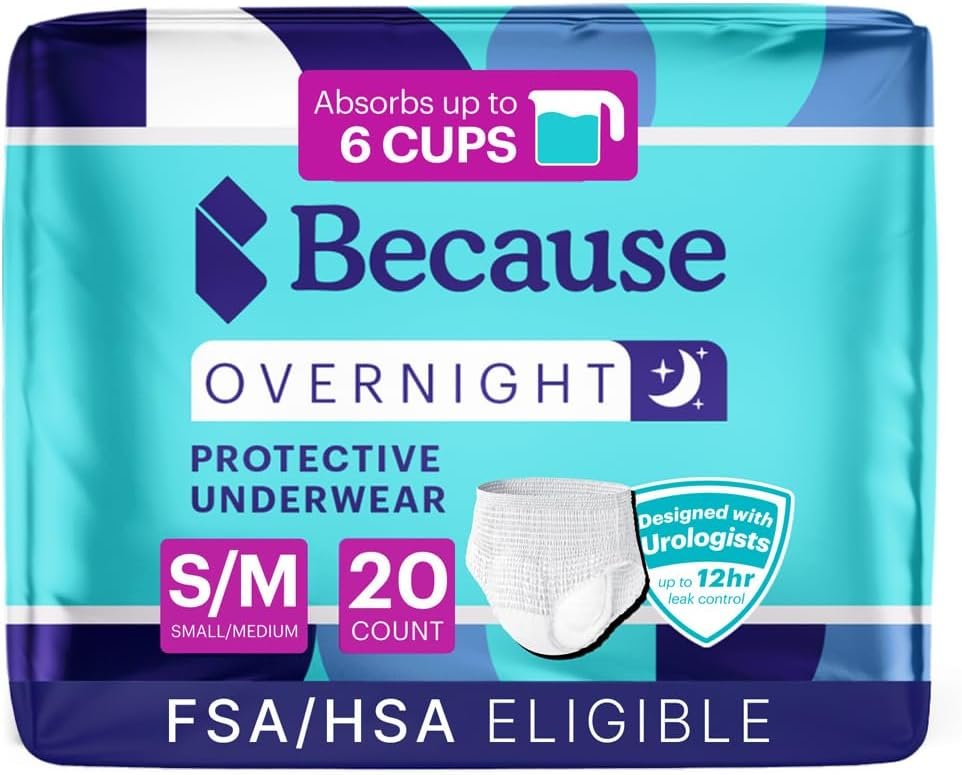
Why it stands out: No other consumer product matches its capacity. It’s designed to handle side-sleep compression leaks and heavy incontinent episodes. Because Market points out that its reinforced side guards make it more effective than some competitors for sleeping (side or back sleepers especially). It’s also one of the few “maximum absorbency” products available for women outside of hospital supplies.
Key features:
- Pull-up underwear with high waist and reinforced sides
- Holds ~6 cups (≈48 ounces) of fluid before leaking
- Dual absorbent core (quick-absorbing top layer + gel-lock bottom layer)
- Wetness indicator strip (in some versions) to signal change time
- Extra-wide back panel for bedridden users
Format & use:
- Disposable high-capacity pull-up – use for 8+ hours (sleeping, travel, bedridden care).
- Change immediately after heavy void or daily, as needed. The goal is to prevent any overflow.
- Sizes typically S–XL (due to bulk, ensure waistband isn’t too tight).
Pros:
- Highest absorbency of any on this list – ideal for maximum protection.
- Good fit with cloth-like feel for a disposable (less plasticized than older briefs).
- Keeps skin drier longer thanks to fast-acting polymer.
- Relatively quiet materials (many buyers say it’s not overly noisy when walking).
Cons:
- Very bulky and not discreet under clothing (like a diaper shape).
- Expensive: typically the priciest per piece.
- Not reusable; heavy on waste.
- Can feel warm if worn too long (no product can breathe perfectly under that much fluid).
Things to consider: This is a specialized overnight solution – most women won’t need 6 cups. If you only have occasional heavy leaks, consider it for nights or travel but wear something lighter during day. The bulk means it’s not comfortable for mobility or exercise. Also, if you are not experienced with changes, be aware this is a nighttime-only style. Since it’s so absorbent, it’s easy to overestimate size – better to size up rather than risk too-tight.
Recommended for: Women with very heavy incontinence, limited mobility, or new moms with very heavy postpartum bleeding. Also good for anyone needing reliable overnight protection (so sheets stay dry).
Not ideal for: Daily wear or active use. If you leak only lightly or moderately, this product will feel unnecessarily thick. Those concerned about environmental impact may prefer a reusable option when possible.
4. Knix Leakproof Bikini Underwear
Best for: Light leaks during exercise or daily activities; active women.
Knix’s Leakproof Bikini is a reusable underwear option made of stretchy nylon-spandex. It looks and feels like a normal pair of panties, with built-in absorbency in the crotch. Each pair holds about 2–3 cups (around 16–24 ounces) of liquid, making it suitable for mild bladder leaks or as backup during workouts. The fabric is thin and breathable (Knix advertises an antimicrobial “Fresh Fix” gusset), and the bikini cut is discreet under clothing. Knix offers many styles (hiphuggers, briefs, etc.) and an inclusive size range up to 5XL.
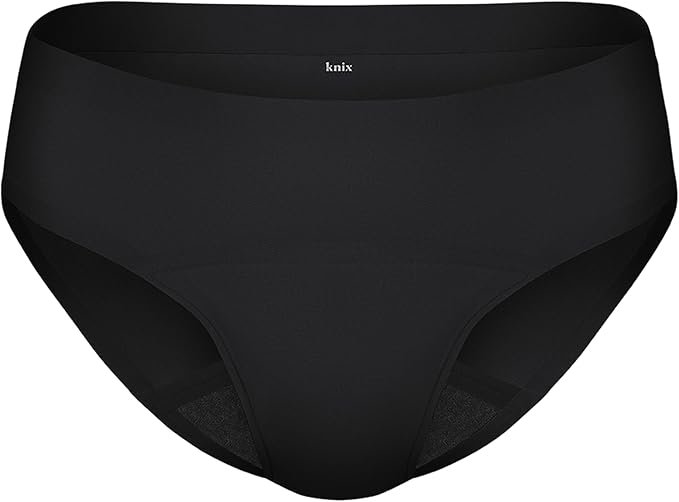
Why it stands out: Knix popularized this category by combining fashion with function. Women love that these underwear don’t look medical at all; they double as period underwear or daily leakwear. Because they’re washable, they reduce waste and long-term cost. After a few uses, many say these feel just like regular underwear in terms of fit.
Key features:
- Washable absorbent panties (microfiber layers)
- Holds ~2–3 cups (roughly 16–24 oz) before needing a rinse
- Breathable nylon-spandex outer layer; cotton-lined absorbent gusset
- Antimicrobial finish to prevent odor buildup
- Available in various cuts (bikini, high-rise, etc.) and colors
Format & use:
- Reusable undergarment – machine wash cold after each use (no bleach, air dry).
- Best worn during the day for light drips, or as backup along with a pad during menstruation.
- Not meant for moderate-to-heavy leaks or overnight (use pad or heavy brief for those).
Pros:
- Looks and feels like everyday underwear (few visible panty lines)
- Extremely comfortable and thin (one tester said she forgot she was wearing them)
- Reusable, so cost per use drops over time; good for the environment
- Wide size range and stylish designs
Cons:
- Limited capacity (only for mild leaks or spotting – not for heavy flow)
- Higher upfront cost (approx. $30–$40 per pair)
- Requires laundry after each wear (no faster solution)
- Without a backup pad, leaks will escape if exceeded capacity
Things to consider: If you choose Knix, start with their leakproof line specifically (they also make period underwear). Be sure to follow wash instructions (gentle detergent, avoid fabric softener). They can stretch out if overtightened, so pick your true size. Remember: even at max absorbency, these are best for low-volume leaks (about a cup or two). For heavier days or sleep, a disposable might still be needed.
Recommended for: Women who want discretion and reuse (active lifestyles, fitness, travel, or everyday confidence). Also great for younger women or anyone who wants to avoid disposables.
Not ideal for: Women with moderate-to-severe incontinence, as capacity is limited. Also not recommended if laundering lingerie frequently is inconvenient (e.g. no easy access to laundry).
5. Always Discreet Maximum Protection Underwear
Best for: Moderate-to-heavy daily leaks in seniors or new moms who want a more underwear-like brief.
Always Discreet (by Kimberly-Clark) offers this maximum absorbency pull-on brief designed for women. It combines a super-absorbent core with a cottony exterior for comfort. It can hold around 3–4 cups of liquid and comes in woman-specific sizing and cuts. Reviewers note that it’s surprisingly thin compared to regular adult briefs and often less noisy in motion. Its feminine design (some prints) helps women feel less “medical” about wearing it.
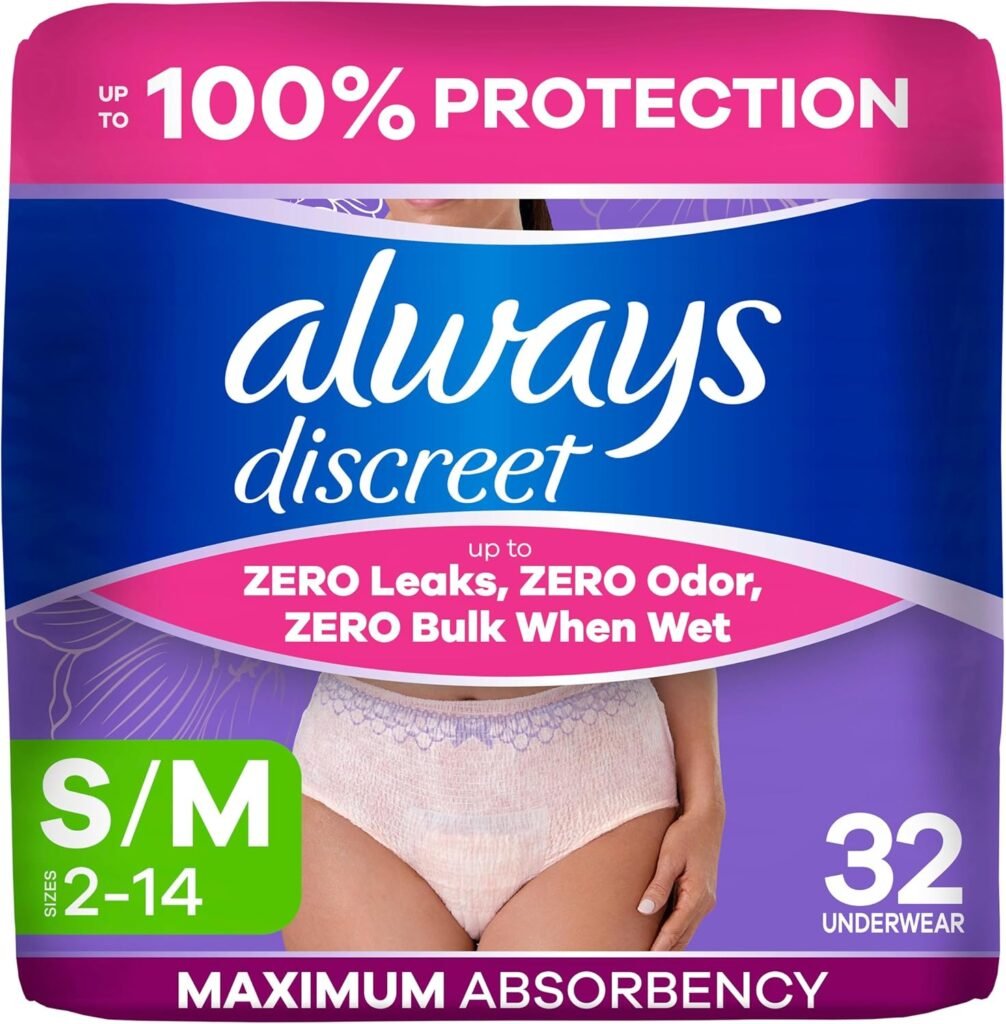
Why it stands out: Among disposable options for women, Always Discreet is known for blending absorbency with discretion. It’s thinner than many competitors with similar capacity. It also features Absorbent Liners that spread fluid for even wetness and Dry-Fast Core technology. Many users appreciate that it looks closer to regular panties and can be worn under light clothing without obvious lines.
Key features:
- Disposable pant-style underwear (Elastic band style)
- Absorbency max ~3–4 cups (suitable for moderate leaks)
- Soft, cotton-like waistband and leg cuffs (for comfort)
- OdorLock™ system to neutralize urine smell
Format & use:
- Disposable daily underwear – change as needed (anytime it feels wet or at least every 4–6 hours).
- Available in sizes S–XXL, many patterns (floral prints in the “Boutique” line).
- Often sold in packs of 10–12 (cost-effective per use if on sale).
Pros:
- Thin and underwear-like; many say it feels less bulky than other brands’ Maximum.
- Good balance of protection and discretion (minimal padding).
- Widely available at drugstores; sample packs often on coupon sites.
- Designed for women with some stretch, not a purely unisex cut.
Cons:
- Less capacity than the overnight-style briefs (not for overnight use).
- Quality control issues reported by some (rare leaks when near capacity).
- Pricier than Depend, though thinner.
Things to consider: Always Discreet Maximum is not a medium-absorbency option; it’s at the higher end for regular disposables. If your leaks are light, it may feel bulky. Also, while it’s thinner, it can still show under very tight or sheer clothing. It should not be used in the wash (disposable only). If you need even more capacity, consider pairing this with a booster pad or moving up to a “Heavy / Overnight” style like the MoliCare briefs (not covered here).
Recommended for: Seniors or postpartum women who want a comfortable, everyday disposable that doesn’t look or feel like a diaper. Also for anyone in need of moderate absorbency without the full bulk of a bed pad or tabbed diaper.
Not ideal for: People who leak heavily overnight or have fecal incontinence (not designed for stool). Also skip if you prefer reusables or if you experience leakage at the waist (this is a pull-up style, so it can sag if not sized right).
What to Look For Before Buying
Shopping for incontinence underwear can feel daunting, but focusing on a few key factors will help you choose wisely:
- Absorbency: Match the product’s capacity to your leakage level. Experts use “cups” (8 oz each) to measure absorbency. Light leaks require about 1–2 cups; moderate leaks 3–4 cups; and heavy leaks or overnight 5–6 cups. (Choosing too low capacity is the #1 cause of overflow leaks.) Check the product specs or reviews for fluid capacity. For safety, it’s better to err slightly higher than you think you need to avoid spills.
- Fit and Sizing: Underwear must fit snugly but comfortably. Measure your waist/hip and compare to the brand’s chart. A common mistake is buying too small, which can cause side gaps and leaks. Too large and the leg cuffs may not seal properly. Note whether a product runs small (many customers suggest sizing up for tight brands). Consider the style: high-waisted briefs cover more surface and are good for tummy support, while bikini or boyshort cuts are more discreet under clothing.
- Material and Comfort: Look for breathable, hypoallergenic fabrics. Cotton or bamboo blends are gentler on skin (WomensHealth recommends these for odor control and softness). Waterproof membranes or plastic-backed layers are needed for absorbency, but ensure the side and waist fabrics are soft and stretchy. Products labeled PFAS-free and dermatologically tested are best, especially if you have sensitive skin. Avoid excessive lace or seams that could chafe during long wear.
- Disposable vs. Reusable: Decide which format suits you. Disposable pull-ups/briefs offer high absorbency and easy changes (just throw away), but cost more over time and produce waste. Washable underwear (like Knix or period panties) are more eco-friendly and cost-effective per use but require laundry care. Reusables often have less capacity, so they work best for light leaks or exercise. Many women use a mix: e.g. reusable for daytime/outings, disposable for overnight or travel.
- Style and Coverage: Incontinence underwear comes in many styles: Tab-style briefs (adult diapers) are easy for caregivers to change and can fit any body shape; pull-up pants look like regular underwear; High-waist briefs offer extra coverage on tummy/back; Bikinis or boyshorts are more fashion-forward. Choose based on mobility and discreetness. For example, tab briefs are useful if you need to change without undressing (good for limited mobility), while pull-ups are faster for independent dressing.
- Odor Control: If odor is a concern, look for products with built-in odor-neutralizing technology (many brands highlight this feature). Also note that frequent changes and proper cleaning (for reusables) are key; no product will stop smell indefinitely.
- Ease of Use: Check how easy it is to put on and take off. Stretchy pull-ups are simple, whereas tab briefs require bending to fasten. If dexterity is an issue, look for tear-away sides or comfortable grips. Travel-friendly packs and compact storage (for disposables) or packing a small laundry bag (for reusables) can make daily life easier.
- Price & Packaging: Compare cost per use. A cheap pair might need changing twice as often, increasing total cost. Some products (especially disposables) allow buying in bulk or via subscription to lower price. Also consider packaging (individual packs vs. tubs) for portability.
- Common Pitfalls: Don’t assume “more is better.” Excess absorbency when you only leak lightly can feel clunky and trap moisture against skin. Likewise, a leakproof pant that’s too bulky can irritate. Always read reviews for real user feedback on comfort and dryness. Verify any special claims (e.g. “holds X cups”) by checking manufacturer specs or other sources.
Safety and Suitability Notes
- Consult a Doctor: Incontinence can have medical causes (UTIs, pelvic issues, neurological conditions). The Office on Women’s Health advises anyone with urinary leakage to speak with a healthcare professional. This guide is not a substitute for diagnosis. If leakage comes on suddenly, is accompanied by pain, or affects only one side, seek medical advice.
- Allergies & Irritation: Some people have allergies or sensitivities (to latex, adhesives, or deodorants). Choose hypoallergenic products free of added fragrances or chlorine bleaches. Also, avoid wearing soaked underwear too long; change promptly to prevent skin rash or infection. Using barrier creams and good hygiene when changing can protect skin.
- Pregnancy & Breastfeeding: Pregnancy can cause temporary incontinence. Consult your obstetrician about appropriate products. Many leakproof panties double as postpartum period underwear; brands like Frida are designed for post-birth bleeding. However, high absorption underwear do not replace pads if you’re still lochia-heavy—use as a supplement, not sole protection.
- Medication Interactions: Some medications (diuretics, blood pressure meds, etc.) can increase urination frequency. Incontinence underwear helps manage symptoms, but don’t adjust meds or self-treat bladder problems without doctor input. Conversely, certain meds or supplements (like caffeine pills) may worsen leaks; discuss with a physician if you’re uncertain.
- Not a Cure: These products manage symptoms, not the underlying issue. They’re intended for protection and confidence, not as a permanent fix. Don’t rely solely on underwear instead of pursuing treatments (bladder training, Kegel exercises, physical therapy) when appropriate.
- Safety Limits: More absorbency means more moisture held against skin; it’s important to change before it’s fully saturated. Keeping even a very absorbent garment on for 12+ hours nonstop can lead to moisture buildup and irritation. Always change when you feel wet or notice odor to protect skin health.
Best for Different Types of Users
- Women in their 20s–30s: Often postpartum or athletic. You may prefer sleek, reusable options (e.g. leakproof panties) for workouts and daily errands. Look for mid-absorbency reusables with odor control. For heavy postpartum bleeding, use high-absorbency briefs (even adult diapers) initially and switch to lighter underwear as bleeding tapers.
- Women in their 30s–40s: Might experience stress leaks from childbirth or on-the-job coughing/sneezing. A middle-ground product like a pull-on pant with ~3–4 cups of absorbency works well. Focus on comfort for all-day wear (cotton blends, soft waistband). Maternity-type high-waist styles can offer extra tummy support during late pregnancy or after.
- Women 50+ (Menopause/Aging): Bladder tone changes can cause heavier leakage. Consider maximum absorbency pull-ups or tab briefs, especially for overnight. Many brands make “age-adjusted” fabrics (cooling, aloe-infused linings) to address thinner, sensitive skin. If mobility is an issue, choose designs with easy-change tabs.
- Active/Bushy Women: If you exercise regularly, pick underwear designed for movement. Many reusable leakproof panties (Knix, Speax) advertise frictionless seams for workouts. Look for moisture-wicking fabrics and grab-and-go disposables that stay put during runs or yoga. Pack extras in gym bag for peace of mind.
- Busy Travelers: Opt for discrete, high-capacity yet thin briefs (like Always Discreet or travel packs of Depend). Space is at a premium when traveling, so consider compact disposable packs or plan to do laundry. A small pouch of pads or booster pads can supplement your underwear if needed.
- Vegans/Eco-Conscious: Choose organic or plant-based materials. Brands like Hesta use 100% organic cotton, and Willow’s disposable underwear uses natural fibers and recyclable packaging. Reusable panties inherently reduce waste. Check labels for hypoallergenic, eco-friendly claims.
- Budget Shoppers: Look for generic or store brands (Amazon Basics, Walmart’s Parent’s Choice) or join subscription plans that lower per-panty cost. Depend Fit-Flex and Carewell’s own brand briefs often go on sale. Washables have higher upfront cost but pay off if leaks are constant.
- Premium Buyers: Luxury brands (Some Only Yours by Share Wellness, Hesta, etc.) offer silky fabrics, fashion prints, or extra features (like aloe lining). If you value comfort and don’t mind the price, these can be worth it. They also often have better customer service and sizing support.
- Beginners: Start with a low-commitment option: a small pack of dependable disposables (like Depend or Always) is a good way to test your true needs. Those new to incontinence products often underestimate leaks – try a “medium” level first and see if you need stronger protection.
- Women Who Dislike Bulky Pads: Almost all adult incontinence underwear is thinner than a diaper pad. We recommend styles specifically marketed as “sleek” or “boutique” (e.g. Always Discreet Boutique) because they minimize bulk. As Knix notes, the goal is to feel like you’re wearing regular underwear with no visible bulge.
Who Should Avoid This Product Category
Incontinence underwear is not needed by everyone. If you have no issues with leakage, there’s no reason to wear extra absorbent underwear; regular underwear and occasional panty liners suffice. Also, if your provider diagnoses a serious medical issue (like untreated infection or nerve damage), focus on medical management first – these garments only cover symptoms.
Women with only minor, extremely occasional dribbles might prefer simple pads or liners instead of full pull-up underwear. And those who are looking for a “cure” should know that diet and exercise or medical treatment may address underlying leaks. In short, use these products for protection and confidence, but do not let them replace consulting a doctor for persistent problems.
Finally, if you find that no over-the-counter garment can handle your leakage (for example, you’re soaking through heavily even the strongest briefs), you might need a different solution (like catheter supplies or specialized bedside pads). In those cases, professional guidance and possibly prescription supplies are warranted.
FAQ
Q: What exactly is “incontinence underwear,” and how is it different from regular underwear?
A: Incontinence underwear is specially made to absorb and contain urine or stool leaks. Unlike regular panties, it has built-in absorbent layers (often polymer gels and cotton/wicking fabric) in the crotch area, plus waterproof backing. Some styles are disposable pull-up pants (like adult diapers) and some are washable leakproof panties. The absorbent core and leak-blocking leg cuffs are what set them apart from normal underwear.
Q: How do I know what level of absorbency I need?
A: Estimate the volume of your leaks. Experts measure capacity in “cups” (1 cup = 8 fluid ounces). If you only have very light dribbles, you might need just 1–2 cups. Moderate leaks need around 3–4 cups. For heavy leaks or overnight protection, aim for 5–6 cups. Many product descriptions list this capacity; if not, user reviews often mention how much they hold. Also think about frequency: if you leak 2 ounces per bathroom break, a 4-cup brief could handle four such events. It’s wise to err higher (one extra cup) to avoid overflow.
Q: Are disposable or reusable incontinence underwear better?
A: It depends on your priorities. Disposable underwear (pull-ups) offer higher absorbency and convenience – just wear one and toss it after use. They’re great for travel or when laundry isn’t an option. But they cost more over time and create waste. Reusable underwear (washable leakproof panties) are more economical and eco-friendly if you have light leaks; just wash and wear again. They are thinner and more discreet, but generally hold less liquid (not ideal for very heavy leaks). Many women use a mix: reusable for day-to-day and disposables for nighttime or events.
Q: What if I leak stool (bowel incontinence)?
A: For bowel leakage, look for heavy-duty, high-capacity briefs with good coverage (flaps that catch both urine and stool). Products like Tranquility SmartCore briefs are designed for this (as noted, it’s the “best for bowel incontinence”). These have wide, full-coverage cores. You may also layer a stool-specific pad inside a heavy brief. In any case, clothing should be changed promptly after any accidental bowel leak to protect skin.
Q: How often should I change or wash the underwear?
A: Change disposable briefs when they feel wet or at least every 3–4 hours during the day (maybe once overnight if well-absorbent). Do not sleep in a soaking-wet garment. For reusable underwear, rinse and wash after each use; most can be machine-washed on cold and line-dried. This prevents odor and skin irritation. Regular changes and laundry are key for hygiene and comfort.
Q: Can my health insurance cover these products?
A: Possibly. Some incontinence supplies are covered (especially under Medicare or Medicaid) if prescribed by a doctor. For example, Aeroflow Urology specializes in helping patients get adult diapers and similar supplies through insurance. However, coverage varies widely by plan and condition. Often, you can get a doctor’s prescription for “incontinence briefs” to submit to your provider. Check your insurance formulary or call their help line to see what’s covered.
Q: Will wearing incontinence underwear make me smell or cause skin problems?
A: Modern products include odor-control layers (like charcoal filters or deodorizing agents) to trap ammonia smell. Still, it’s normal for any urine odor to develop as the garment fills. The key is frequent changes and proper cleaning (for reusables). To protect skin, ensure the underwear wicks moisture away from the body (breathable, cotton-rich fabrics help). Some products are dermatologist-tested and marked hypoallergenic to reduce irritation. If you notice redness or rash, change more often, use barrier creams, and consult a doctor if it persists.
Q: Are there incontinence underwear options for pregnant or new mothers?
A: Yes. While pregnancy alone might cause occasional drips, postpartum women often need extra protection as tissues heal. Many brand lines designed for postnatal use (like Frida postpartum panties) double as leakproof underwear. These are high-waisted and very absorbent in the crotch (usually used with a hospital pad inside). For ongoing postpartum leakage, you can use any regular leakproof briefs from our list, focusing on high-absorbency disposable ones. Pelvic floor exercises can also speed recovery; consider talking to a pelvic health specialist after birth.
Q: How should I choose the right size and fit?
A: Always measure yourself and check each brand’s size chart. Unlike fashion panties, incontinence underwear must have snug elastic at the waist and legs to prevent side leaks. For pull-ups, measure waist and hips; for tab-style briefs, waist is most important. If between sizes, it’s usually safer to go up, as too-tight can dig into skin and cause leaks at the edges. Also consider your height: if you’re petite or plus-size, look for “petite” or “plus” lines (Depend, Prevail, etc.). A proper fit means the underwear moves with you without sagging.
Final Verdict
For most women, Because Market Premium Maximum Plus combines capacity and comfort, making it our Best Overall pick for moderate leaks. It handles everyday spills without the bulk of a heavy diaper. For tight budgets, Depend Fit-Flex is the Best Value – it won’t win style contests, but it reliably catches leaks on the cheap. If you need the absolute Most Protection (e.g. for overnight or severe leaks), Because Overnight Plus is the top choice; nothing holds more. For women preferring reusable and sleek designs, Knix Leakproof is the go-to Daily Wear panty (just remember its limits). New moms dealing with heavy postpartum flow may opt for Frida Postpartum Underwear or other high-waist briefs early on. Finally, seniors or anyone with moderate-to-heavy daytime leaks should consider Always Discreet Maximum for its blend of absorbency and discretion.
Best for: moderate everyday protection – Because Premium Maximum Plus.
Best Budget: Depend Fit-Flex or a store-brand pull-up (good enough for new users).
Best Premium/Heavy: Because Premium Overnight Plus (6 cups).
Best Daily Comfort: Knix Leakproof Bikini (reusable, for light leaks).
Best for Bowel/Bedridden: Tranquility SmartCore briefs.
Best Postpartum: Frida Postpartum High-Waist Panties.
By matching the product to your specific needs (see the “Best For” labels above), you can manage incontinence effectively. Remember to consider fit, frequency of use, and how the product fits into your lifestyle. With the right choice, you can stay dry and confident.